Cuba rests less than 100 miles off the Florida coast and has been a haunt for America’s rogue since the early 1900s. An island rife with history and lore, the island was home to Ernest Hemingway who wrote The Old Man and the Sea during his 22 year tenure on the island. Diplomats and American mafia frequented its clubs while Cuban revolutionaries plotted rebellions in musical cafes and CIA trained operatives botched ground assaults at the Bay of Pigs. Continue reading
Sports
Action is movement comprised of moments. At a most basic level it's a reaction to stimulus and, commercially packaged, action is a huge part of American culture. Whether professional, amateur, or purely recreational, there is always action to be photographed. Sometimes moments within an action are pivotal and historic, though not realized for years to come. Other moments may be imminently pivotal and cause for immediate jubilation, consternation, or aggression. A face tells the story. Working professionally it's my job to tell a story when photographing action, which involves large amounts of anticipation and patience. The trick is anticipating a moment that best tells the story-- a constantly moving target. These moments are from a small, cross section of the limitless sports action found in our daily culture.
Sudan Upper Nile Refugees
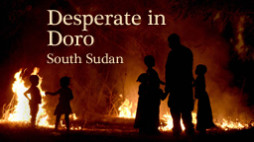
Though the borders separating North and South Sudan were established by the British in 1953, they weren't formally recognized until July 9, 2011, when South Sudan voted to secede from the predominantly Arab North. The resulting two countries left thousands of marginalized tribes living along a contentious border who, despite their proximity, sided more ethnically and politically with the South. In September, 2011, villages in the Upper Nile became the targets of North Sudan's Antonov bombers, as directed by Khartoum, who today continues to push these marginalized tribes south and--through terror--squelch a perceived threat to the North's primary interest-- oil. Displaced tribes, from Malakal to Yida and Bala Tuma, consist of Mayak, Uduk, and Jum Jum tribes who are Muslim, Christian, and Animists. The week before I arrived with doctor Alan Kelley a refugee camp in Yida and a market in Bala Tuma, 30 km away, were bombed resulting in 20 deaths and a mass migration south. Under the light of moon, thousands of traumatized villagers packed their belongings in wicker baskets and fled south to Doro. We arrived in Doro November 14, 2011. Within that week a small community of perhaps 1000 refugees grew to approximately 12,000. The surrounding forest and scrub become bare as refugees sought firewood, shelter and food. The UNHCR, who arrived just 24 hours before us, began registering 1000 refugees a day. They projected 40,000 refugees by December and up to 70,000 living in the surrounding bush by January, 2012.
Sri Lanka Tsunami
In horrific proportions, told through first hand accounts and oceans of tears, the Indonesian tsunami ruthlessly reminded the world how fleeting life on earth can be. In only minutes, the world lost unofficially 283,100 lives on Sunday, December 26, 2004. The first wave lashed Sri Lanka's eastern shore at approximately 9:00 a.m., nearly two hours and 2000 miles from a 9.0 earthquake that struck Indonesia at 7:58 a.m. local time. Its epicenter was 255 miles southeast of Banda Aceh, Sumatra, at a depth of 18.6 miles, or 30 kilometers (USGS). Today, over 10,000 are still recorded as missing. From Thailand to Indonesia, Bangladesh to Sri Lanka, the Maldives to Myanmar and Somalia, the quake had tipped the Indian ocean setting forth a ripple characterized as biblical as not just villages, but islands were forever swept from view. --SS
Middle East & Gaza
The Middle East is many things to many people. It is where stories have come from and where stories evolve. Westerners have come to know the Middle East through the Arab-Israeli Wars, the Iran-Iraq War, and the Persian Gulf Wars. At the root it is the homeland of the world's three monotheistic religions: Christianity, Islam, and Judaism. Such wars are indicative of the spiritual depth, the economic resources, and the political stakes serving as bedrock for this region. Defining boundaries becomes even more complex as borders and loyalties change over time--and cultures are destroyed. Chris Hedges challenges, "War is a force that gives us meaning." Historically, and for now, the Middle East includes the lands of Gaza, Israel, and the Palestinian Territories as shown here during trips taken with Physicians For Peace.
Kosovo
This work is the result of two trips taken to the region in 1999. The first came just before NATO began their air attacks and the subsequent exodus of native Kosovars, many with Albanian roots, to neighboring Albania and Macedonia. The second trip was within days of the NATO and KFOR ground troop assault when Serbia ultimately withdrew from Kosova--a Yugoslavian province thirsting for independence. The following months revealed ghastly accounts from a traumatized rural population as Kosovars returned to torched homes and fields of massacred relatives. The Yugoslav war resulted in the largest human exodus in Europe since WWII. The majority of this work was shot on Tri-X and Fujichrome using Leica M6s and syndicated by Black Star Publishing. Prints are available for exhibition and educational purposes.
Juvenile Bootcamp
This work grew out of an assignment I had while Chief Photographer at The Albany Herald in South Georgia after the newspaper received information that a once empty prison for adults in Ocilla, Georgia, was to be modernized and used to reform juveniles. Juvenile courts from around the state would now have a new 316 bed facility for their troubled youth. The Youth Development Campus brought 165 new jobs to a rural economy, a $2 million payroll, and about $35,000 a year in property taxes. Recidivism statistics show that 64-71% youths return to such camps. I photographed the project in black and white using Kodak 3200 ASA recording film to facilitate a documentary and candid approach and to help crystallize those methods used in juvenile reform. The camp closed November 30, 2002, due to state cut backs. --SS
Haiti Quake
The 7.0 magnitude earthquake that struck Haiti Tuesday, January 12, 2010, was the strongest quake to hit the area since 1770 (USGS). The epicenter was located 15 miles WSW of Port-au-Prince in Leogone at a depth of 13 km (8.1 miles) recorded at 21:53 UTC (1:53:10 PST). Considered the poorest country in the Western Hemisphere before the quake, Haiti suffered 316,000 deaths and 300,000 injuries after the quake with 1.3 million being displaced. Relief from around the world poured into Port-au-Prince, but soon became a political and distribution quagmire as governments and NGOs failed to find common ground in a mutual effort. Today, despite a now contained cholera outbreak that killed 580 people and hospitalized over 9,000, Haiti continues to struggle for a social and political foothold. --SS
Africa
Africa is the world’s second largest and second most populous continent after Asia with some 2000 distinct ethnic groups and 54 separate countries, not including several disputed territories. At about 30.2 million km² (11.7 million sq mi) including islands, Africa covers 6% of the Earth’s total surface area and 20.4% of the total land area. With 1.0 billion people (2009) in 61 territories, it accounts for about 14.72% of the world’s human population. Africa has over 2000 languages spoken with Arabic being the highest number of speakers with over 170 million, mostly living in North Africa and the Horn of Africa. It is the most compact of all the continents in terms of shape and comprises the oldest rocks pertaining to the Pre-Cambrian Era. The Sahara desert, the largest expanse of dry land in the world, is over 10.4 million square kilometers. South Sudan is Africa’s newest country officially born July 9, 2011. Continue reading
Portraits
A portrait can be many things. It can be deeply personal and non technical or highly orchestrated and commercial. It can be a fleeting moment or a 30 minute session, which can be eternity for both subject and photographer. I tend to work simply and seldom use more than two strobes to facilitate expediency and spontaneity. These editorial portraits are a selection from over a 20 year period. They include newspaper, magazine, and corporate assignments from around the world. In an editorial sense the portrait should set a tone, introduce a topic or theme, and compliment any accompanying text. Existing light is usually leveraged, but in many cases strobes are used to help create a mood. Through framing and lighting, and many times luck, the portrait evolves. It is never a "one shot" session.